Welding
How To Choose the Best Welding Career for You
Compare eight welding career paths by work setting, career stage, qualifications and trade-offs. See how welding training can help you get started.
In This Article
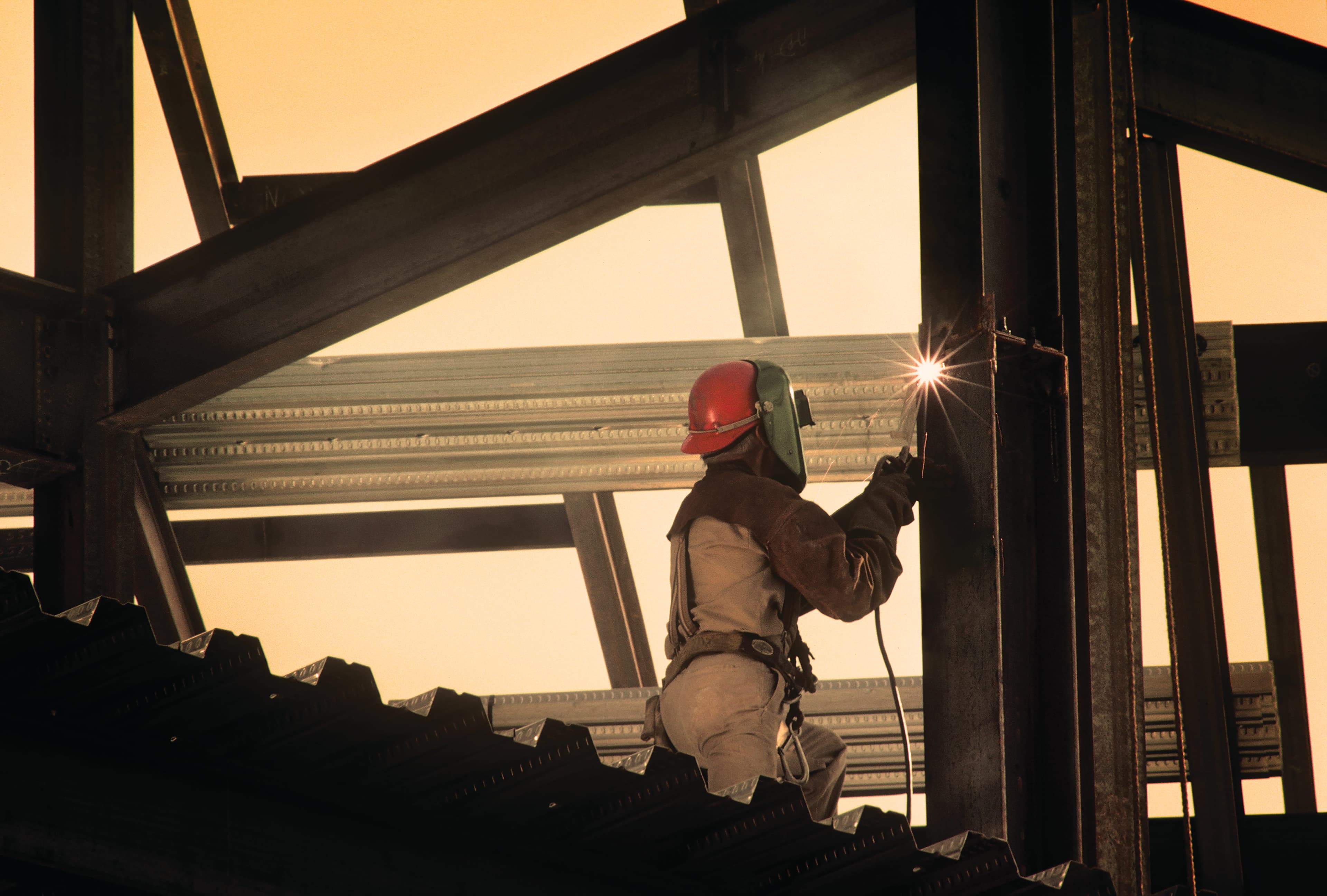
The best welding career is the one that matches the work you enjoy, the environment you prefer, and the experience or credentials you currently have.
For someone entering the field, paths to compare include welder, fabrication welder, welder fitter and wirer. Inspector, quality control, certified welding inspector (CWI) and welding project manager are advanced paths that may become possibilities later.
Universal Technical Institute (UTI) offers Welding Technology and Welding Specialist programs that can help students build foundational welding skills. Our grads are prepared to pursue entry-level roles.1 As with any industry, over time, technicians may be able to advance in their careers with experience and hard work.
Job titles, responsibilities and qualification requirements vary by employer, industry and location. Keep reading to compare what each path may involve, where the work can happen and what to consider before narrowing your options.
What Are the Best Welding Careers To Consider?
No single welding career is best for everyone. A useful comparison starts with the kind of work each path emphasizes and whether it is an entry-level or advanced option.
Career path | Career stage | May fit someone who enjoys | Typical focus | Important consideration |
Welder | Entry-level | Varied hands-on work | Joining, repairing and cutting metal | Conditions and employer tests vary |
Fabrication welder | Entry-level | Building from drawings | Preparing, assembling and welding components | Work may be custom or production-based |
Welder fitter | Entry-level | Layout and precision | Positioning and aligning components before welding | Some employers combine fitting and welding |
Wirer | Entry-level | Detailed joining and assembly | Precise production or assembly work | The title is not standardized |
Inspector | Advanced | Measurement and specifications | Evaluating work and documenting results | An inspector title is not the CWI credential |
Quality control | Advanced | Records, consistency and problem-solving | Identifying defects and tracking corrective action | Scope differs among employers |
Certified welding inspector | Advanced | Codes and technical evaluation | Verifying welding work against requirements | American Welding Society (AWS) eligibility and examination requirements apply |
Welding project manager | Advanced | Planning and coordination | Managing schedules, materials, budgets and communication | Relevant experience is generally expected |
Welder, fabrication welder, welder fitter and wirer may provide entry points into the field. Inspector, quality control, certified welding inspector and welding project manager generally build on related experience, additional training, employer requirements or professional credentials.
Learn more about the traits aspiring welders need to have to succeed in their training and their post-program careers.
Entry-Level Welding Career Paths
The following paths may provide starting points for graduates with relevant training.77 Employers decide which skills, tests and qualifications are required for each position.
1. Welder
A welder joins, repairs, or cuts metal parts and products using the processes and equipment required for the work. Tasks may include reading drawings and specifications, measuring components, preparing surfaces, choosing process settings and checking completed work.
Welders may work indoors or outdoors, including in manufacturing facilities, fabrication shops or confined work areas. Schedules and physical conditions vary by employer and industry.
This path may fit someone who enjoys varied hands-on work, follows detailed instructions, and wants to see a direct connection between technique and the finished result.
Completing a welding program does not automatically provide an individual welding certification. Employers may also require a job-specific welding test based on the process, material, position, procedure or code used.
Read more about what welders do on a daily basis.
2. Fabrication welder
A fabrication welder helps turn individual metal components into products or assemblies. The work may combine drawings, measurement, cutting, joint preparation, fit-up and welding.
Fabrication welding often takes place in shops or production environments. Some work follows repeatable production specifications, while other projects require more custom preparation and assembly.
This path may fit someone who enjoys spatial problem-solving, precise measurements and watching a project take shape from a drawing or set of instructions.
The title alone does not reveal the processes, materials or tolerances involved. Prospective applicants should review the specific duties and testing requirements listed by each employer.
3. Welder fitter
A welder fitter positions, aligns and secures components before or during welding. Tasks may include checking dimensions, shaping edges, preparing surfaces, and using templates, jigs, fixtures or precision measuring welding tools.
The work can take place in fabrication shops, manufacturing facilities or project-based work areas. Accurate fit-up matters because alignment and spacing can affect the completed assembly.
This path may fit someone who enjoys layout work, careful measurement and solving alignment problems before joining begins.
Some employers combine fitting and welding responsibilities in one position. Applicants should confirm how much of the job involves preparation, alignment and welding.
4. Wirer
A wirer performs detailed production or assembly joining work, although the title is not standardized across employers.
O*NET lists wirer as a reported title within the broader welders, cutters, solderers and brazers occupational group. Tasks within that group may include positioning and securing workpieces, applying solder along adjoining edges, and checking grooves, angles or gap allowances with precision measuring instruments. Those examples describe the broader occupational group and may not apply to every position using the wirer title.
The work may occur in manufacturing or assembly environments where consistency, control and close attention to specifications are important. It may fit someone who enjoys detailed, repeatable tasks and precise handwork.
Because the title is ambiguous, applicants should confirm the materials, equipment, joining processes and qualifications involved before deciding whether a particular position fits their goals.
Advanced Welding Career Paths
The following paths should not be treated as immediate graduate outcomes. They typically require related work experience, added responsibilities, employer-specific qualifications or a professional credential.
UTI grads are prepared to pursue entry-level roles. As with any industry, over time, technicians may be able to advance in their careers with experience and hard work.
5. Inspector
An inspector evaluates completed work and welding-related activities against drawings, procedures, codes or specifications. Responsibilities may include visual examination, measurement, documenting results and coordinating additional testing when required.
Inspection may take place in production facilities, fabrication environments or project sites. The exact scope depends on the employer and the work being evaluated.
This path may fit someone who prefers technical evaluation, documentation and identifying whether completed work meets established requirements.
An employer-assigned inspector title is not the same as the American Welding Society Certified Welding Inspector credential. Applicants should confirm whether a position requires a particular certification or level of experience.
6. Quality control
Quality control work focuses on whether materials, processes and completed products meet established requirements. Tasks may include reviewing records, measuring finished components, identifying welding defects or deviations, and documenting recommended corrective actions.
The work commonly supports production or fabrication operations and may cover more than individual welds. Employers define the title, authority and responsibilities differently.
This path may fit someone who enjoys working with measurements, documentation and patterns in production results.
Before pursuing this path, determine whether the position focuses on hands-on inspection, process documentation, corrective action or a broader quality system.
7. Certified welding inspector
A certified welding inspector holds a professional credential issued by the American Welding Society. A CWI may evaluate welding work, procedures and documentation against the codes, standards or specifications that apply to a project.
The work may be performed in facilities or at project sites and requires strong knowledge of welding processes, inspection principles and technical requirements.
This path may fit someone who enjoys codes, documentation, detailed examination and making evidence-based decisions about whether work meets requirements.
Under current AWS CWI requirements, candidates must pass a vision test, document a qualifying combination of education and welding-based experience, and complete the required examinations. Completing a UTI Welding program does not automatically satisfy CWI eligibility or examination requirements.
Get a deeper breakdown on industry-backed welding certifications.
8. Welding project manager
A welding project manager coordinates the people, materials, schedules and information needed to complete welding-related projects. Responsibilities may include planning work, tracking budgets, communicating with clients or other stakeholders, and monitoring quality and safety requirements.
The work may span office, production and project-site environments. The balance between technical knowledge, documentation and coordination depends on the employer and project.
This path may fit someone who enjoys organizing complex work, communicating across groups and keeping multiple priorities moving toward the same result.
Welding project manager is an advanced path, not a role landed right out of welding school. Employers typically require substantial welding-related experience, leadership experience or other qualifications.
How To Choose Between Welding Career Paths
Start with the work you want to perform, not the title that sounds most impressive. Use questions like these to form a shortlist:
- Do you want to spend most of the day welding, fitting components, evaluating completed work or coordinating projects?
- Would you prefer varied projects or repeatable production tasks?
- Are you comfortable with the work environment, including possible heat, fumes, outdoor conditions, confined areas, or evening and weekend schedules?
- Do you prefer physical fabrication work or working with documentation, measurements and specifications?
- Does the path require experience, an employer test or a credential you do not yet hold?
- Are relevant positions available in the region where you intend to work?
A career assessment can help identify preferences, but it cannot establish eligibility for a particular position or professional credential.
How Automation Is Changing Welding Careers
Automation is changing some welding and production tasks, particularly in manufacturing. The Bureau of Labor Statistics (BLS) states that manufacturing automation may limit overall demand for the combined welders, cutters, solderers and brazers occupational group.
That does not mean foundational welding knowledge stops mattering. Drawings, materials, joint preparation, process settings, equipment operation and quality requirements still affect whether completed work meets specifications. Automated work must also be set up, monitored and evaluated against the project’s requirements.
When comparing training programs, ask whether the curriculum develops underlying welding, fabrication, measurement and quality knowledge. Those fundamentals are more useful than choosing a path based only on whether its current tasks are performed manually or with automated equipment.
Read more about the pros and cons of becoming a welder.
Welding Career Salary and Job Outlook
The BLS publishes national data for the combined welders, cutters, solderers and brazers occupational group.
- Median annual wage: According to the BLS, the median annual salary for welders, cutters, solderers and brazers in the United States was $53,750 in May 2025.26 (This means half of welders earned more and half earned less. Keep in mind that salary depends on several factors, including experience, employer, demand and cost of living in the area.)
- Total employment: Total welder employment is expected to exceed 467,000 by 2034.50
- Estimated average annual openings: 45,000+ estimated average annual welding job openings in the U.S. from 2024 to 2034.42
How Welding Training at UTI Can Help You Get Prepared
UTI’s welding training spans 9 to 10 months from start to finish, depending on the program taken.
Program | Length | Instructional hours | Availability |
Welding Technology | 9 months | 900 total hours: 501 classroom and 399 lab | Available at multiple UTI campuses; confirm the current location |
Welding Specialist | 10 months | 960 total hours: 146 didactic (theory) and 814 lab | Canton, Michigan |
The Welding curricula were developed with industry leader Lincoln Electric. Students in the program use VRTEX virtual welders to practice technique in a controlled environment before transitioning to live welds.
Training covers four core arc welding processes:
- Gas metal arc welding (GMAW), commonly called MIG welding.
- Shielded metal arc Welding (SMAW), commonly called stick welding.
- Flux-cored arc welding (FCAW).
- Gas tungsten arc welding (GTAW), commonly called TIG welding.
Welding courses also address safety, blueprint reading, measurement, project planning, fabrication and welding in different positions. Exact courses and equipment access vary by program.
These fundamentals can help students prepare to pursue entry-level paths such as welder, fabrication welder, welder fitter and wirer post-graduation. Program completion does not automatically make a graduate an AWS Certified Welder or qualify someone for inspector, quality control, certified welding inspector or welding project manager positions.
UTI’s Career Services team can assist students and graduates with résumés, interview preparation and job searches, although employment cannot be guaranteed. Prospective students can compare current welding courses and welding locations before choosing a program.
Welding Career FAQs
Which welding career is best for beginners?
Welder, fabrication welder, welder fitter and wirer are some entry-level paths to compare. The best fit depends on whether someone prefers general welding, fabrication, detailed fit-up or another type of joining and assembly work.
UTI’s Welding programs can help students build foundational skills for entry-level roles, but every employer sets its own hiring, qualification and testing requirements.
An advanced title also does not automatically guarantee higher pay.
What is the job outlook for welding careers?
The BLS projects an estimated average of 45,600 welding job openings between 2024 and 2034.42
These national projections describe an occupational group and do not guarantee an individual employment outcome.
Do welding certifications need to be renewed?
Renewal requirements depend on the credential and issuer. AWS certified welders must submit maintenance documentation every six months confirming continued use of the applicable welding process.
The CWI credential follows a different schedule. AWS currently requires renewal submissions at years three and six, followed by recertification requirements at year nine. Credential holders should verify current rules directly with AWS before a deadline.
Can welders advance into inspection, quality control or project management?
Yes, inspector, quality control, certified welding inspector and welding project manager may become possible paths with relevant experience and any required employer qualifications or credentials.
Our grads are prepared to pursue entry-level roles. As with any industry, over time, technicians may be able to advance in their careers with experience and hard work. UTI does not guarantee advancement into any particular position.
How long does welding training take at UTI?
UTI’s welding training takes 9 to 10 months, depending on the program. Welding Technology and Welding Specialist have different curricula and published instructional-hour totals, so prospective students should confirm which program is offered at their preferred location.
Program length should be considered alongside the curriculum, instructional hours and hands-on training rather than treated as the only point of comparison.
Take the Next Step Toward Welding Training at UTI
The best welding career for you starts with the work you want to do every day. Whether you’re drawn to building metal assemblies or getting every component into place, compare the tasks, settings and qualifications behind each path. UTI’s Welding Technology and Welding Specialist programs can help you build welding and fabrication skills as you prepare to pursue entry-level work.
Have a path in mind, or still figuring out where to start? Request information from Admissions online or by calling at 1-800-834-7308. Apply now to get started ASAP.
Universal Technical Institute of Illinois, Inc. is approved by the Division of Private Business and Vocational Schools of the Illinois Board of Higher Education.
Train for the Future
Imagine waking up each day excited to work in a career you’re passionate about – one where your hands-on skills make a real impact. UTI’s vocational trade school can help you gain the skills and confidence to pursue what you love.
