
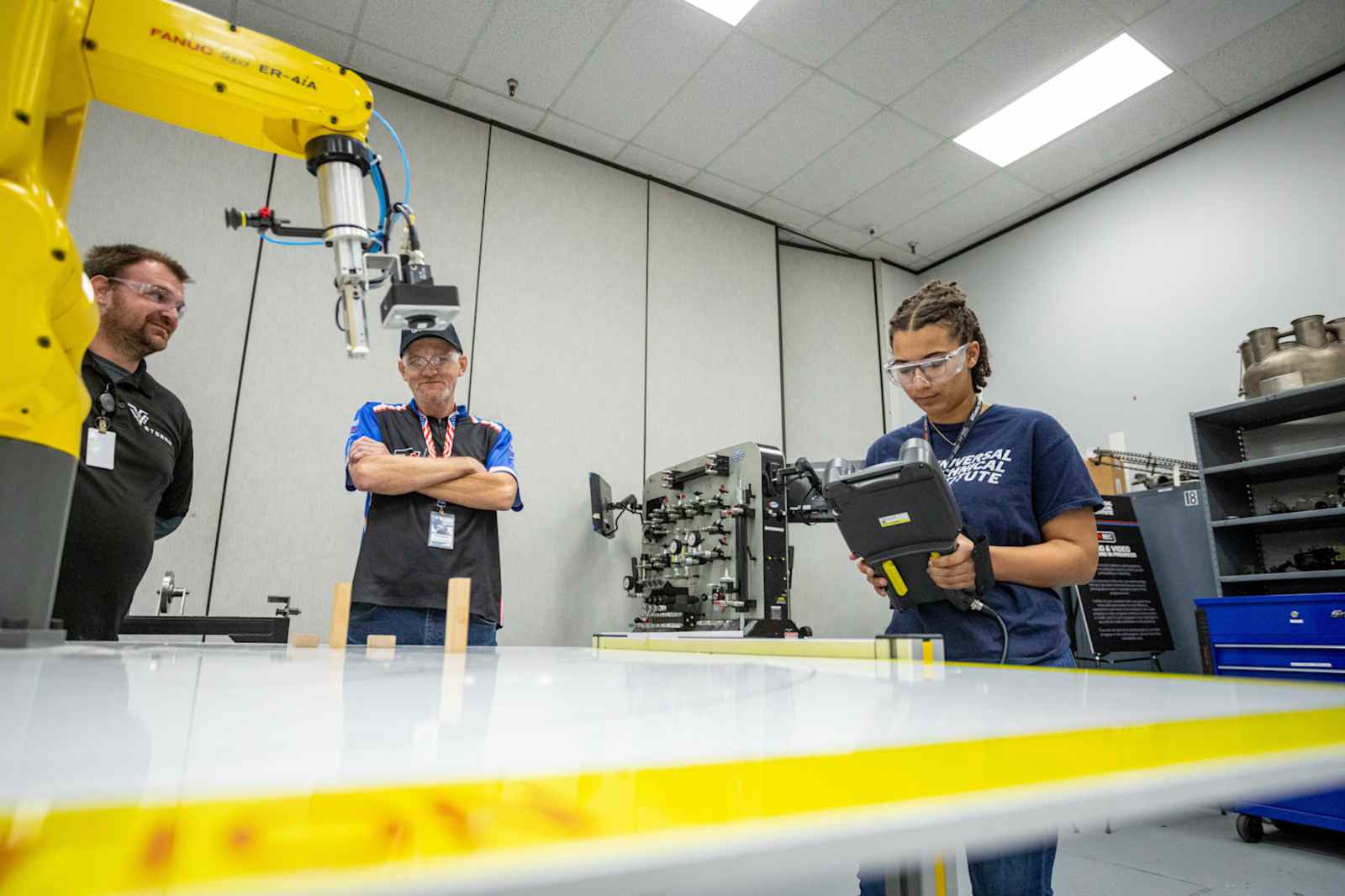
Electrical, Robotics & Automation Technology Program Overview
UTI’s electrical, robotics and automation training in Atlanta begins with a foundation in construction-related electrical training, including wiring, circuits and safety practices. From there, it expands into robotics and automation. You’ll learn how to install, maintain and repair automated electrical systems, preparing for a career as a skilled technician after graduation.130
Electrical, Robotics & Automation Training Paths at UTI Atlanta
UTI Atlanta’s robotics and automation programs share a strong technical foundation but differ in duration and credential. Students can begin either program directly based on their educational goals.
12-month diploma program: Electrical, Robotics & Automation Technology
This training path emphasizes core technical skills in electrical theory, wiring, industrial robots and automated systems to help prepare students for entry-level opportunities in the field.- NCCER credentials + diploma
- Fast-track prep for technician roles
- Hands-on lab training
19-month associate degree program: Electrical, Robotics & Automation Management Technology
Students receive the same core training as the diploma program while completing courses that teach them additional skills.- NCCER credentials + associate of occupational studies (AOS) degree
- Prep for technician roles while earning a degree
- Hands-on lab training + expanded coursework
What To Expect From Electrical Technician Training in Atlanta
- Complete in 12-19 months
- Job search assistance
- Chance to earn three NCCER credentials.
- Experienced instructors with industry backgrounds
- Hands-on lab training with real-world equipment.

Photo from UTI Mooresville.
Electrical, Robotics & Automation Courses at UTI’s Atlanta Campus
You can train to diagnose and repair the electrical and automated systems that drive today’s industries. Our courses focus directly on technical skills, so you won’t have to take unrelated general education classes. The courses we offer include the following:
- Introduction to Technical Trades
- Applied Math and Measuring Tools
- Electrical Wiring
- Electrical Applications
- DC Electrical Theory
- AC Electrical Theory
- Advanced Electrical and Controls
- Electrical and Electronics Troubleshooting
- Programmable Logic Controllers
- Computers and Networking
- Computer Aided Design
- Advanced Programming
- Foundation Programming
- Instrumentation and Control
- Hydraulics and Pneumatics
- Industrial Robotics
- Mechanical Systems & Maintenance
Electrical, robotics and automation students at UTI Atlanta are focused on learning skills for the industry in classes taught by instructors with real-world experience.
Career Opportunities for Electrical, Robotics & Automation Technicians
Graduates of UTI’s robotics and automation technician training in Atlanta are prepared to pursue a variety of entry-level roles. Over time, with experience and hard work, technicians may advance in their careers. Entry-level and advanced career paths include: 77
-
Entry-level
- Robotics & automation technician
- Control systems technician
- Machine specialist
-
Advanced
- Instrumentation and controls technician
- Senior maintenance technician
- Process control tech
Career opportunities vary by location and industry demand. UTI’s Career Services team can help connect graduates with local employers in Atlanta and across Georgia.1
Where Is UTI's Explore UTI’s Atlanta, Georgia, Campus
The Atlanta campus gives students access to training in one of Georgia’s busiest industrial regions. With opportunities across construction, automation and advanced manufacturing, Atlanta is a strong place to train for a career in robotics and electrical technology.
CAMPUS LOCATION
7100 Highlands Parkway SE
Smyrna, Georgia 30082
470-972-2100 | Campus
* If you wish to post a job please click here.