
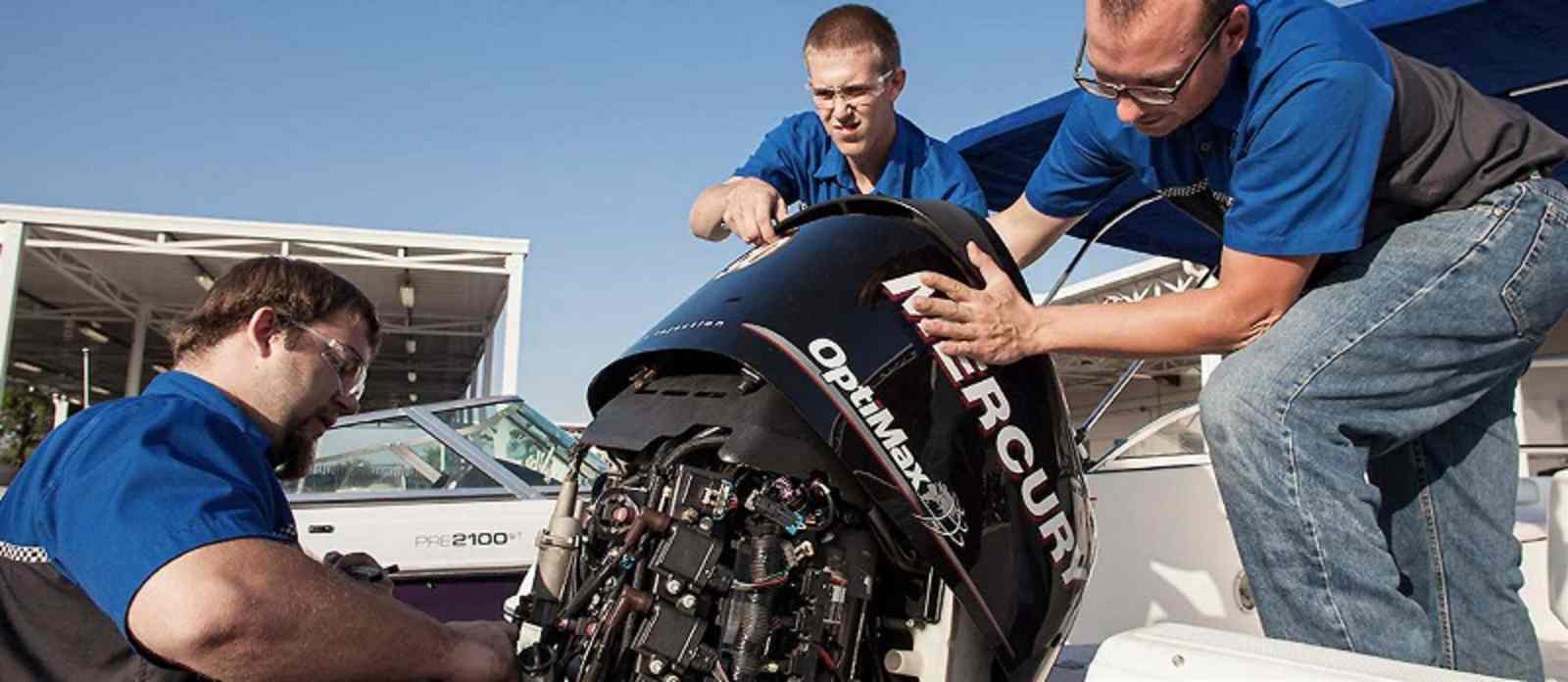
Boats move people, power industries and support recreation across the country, from fishing charters and cruise lines to weekend boating trips. Behind every reliable vessel is a trained marine mechanic who keeps it running smoothly.
If working near the water and solving mechanical challenges sounds like your kind of job, this guide covers what a marine mechanic does, salary expectations and how to become a marine mechanic through hands-on training.
Boats transport people, power water-based industries, are essential for tourism and recreation, and are viewed by many as one of the coolest forms of transportation around. Marine mechanics keep these impressive vehicles working and get to enjoy time by the water as they do so.
If working in an environment surrounded by boats and water sounds like your dream job, read on to learn the answer to what is a marine mechanic.
What Is a Marine Mechanic?
A marine mechanic — also called a marine technician — is a skilled professional who inspects, maintains and repairs watercraft such as sailboats, powerboats and personal watercraft. They work with engines, propulsion systems, electrical components and other complex systems that keep boats safe and running efficiently.
Marine mechanics can find employment in a variety of settings, including marinas, service yards, dealerships, yacht centers and independent repair shops. Some also work for the military or commercial shipping operations. Others may join businesses that rent or sell boats for recreation and tourism — offering the flexibility to build a career in both local and coastal environments.
Marine Mechanic Job Description
Every day as a marine mechanic brings new types of work and challenges, depending on the vehicle that’s being repaired and the issue that is being fixed. Generally, marine mechanic job descriptions include:
- Examining and troubleshooting boats to determine the types of repairs needed and how long they will take.
- Testing and repairing boat engines, electrical systems, navigational equipment, hulls, propellers, masts, rigging and sails.
- Evaluating and installing refrigeration and sanitation systems, steering gear, electrical systems, cabinetry and electrical systems.
- Conducting intake and plumbing repairs and electrical air-conditioning maintenance.
- Communicating with clients and completing repair documents and service records.
UTI’s grads start out prepared to work as entry-level technicians or in other entry-level roles.1 As with any industry, over time, they may be able to advance in their career with experience and hard work. Here are some of the many entry-level and advanced marine mechanic jobs you may be able to pursue:
Entry-Level Roles
- Marine Technician – Performs basic inspections, maintenance and repairs on boat engines and systems.
- Equipment Maintenance Technician – Helps maintain tools, shop equipment and marine testing systems.
- Inspector – Assesses boats and mechanical components for performance, safety and quality standards.
- Parts Associate – Works with parts inventory and assists with ordering components for repair or maintenance.
Advanced Roles77
- Marine Electrician – Installs, maintains and troubleshoots marine electrical systems and equipment.
- Marine Propulsion Technician – Specializes in diagnosing and repairing inboard, outboard and sterndrive propulsion systems.
- Outboard Motor Mechanic – Focuses on servicing and rebuilding outboard engines used in small- to mid-sized vessels.
- Marine Refrigeration and Air-Conditioning Technician – Repairs and maintains temperature control systems aboard boats.
- Marina Service Manager – Oversees service operations and supervises teams of marine technicians.
- Rig Shop Manager – Manages rigging operations, ensuring vessels are properly equipped for safe operation.
- Shop Manager or Owner – Runs or owns a marine service business, coordinating customer service and technical work.
Whether you want to move up the ranks in marine leadership, become your own boss, or work on boats all day, marine mechanic training prepares you for a range of opportunities.
Why Consider a Career as a Marine Mechanic?
Work with your hands and stay close to the water
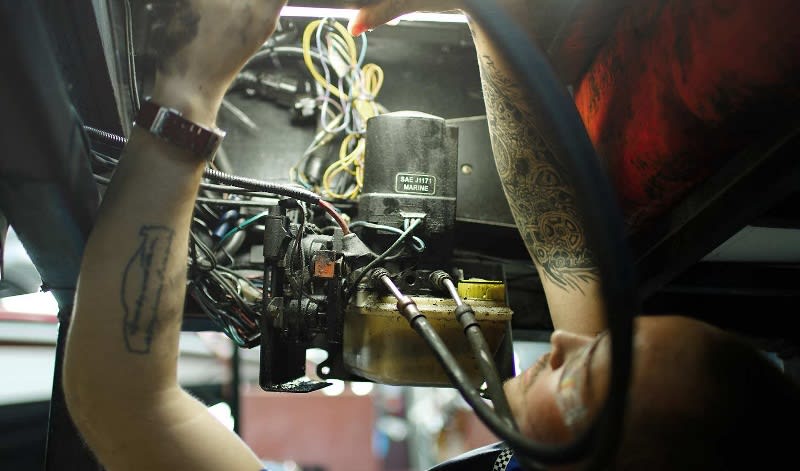
Few careers combine hands-on problem-solving with a waterfront environment like this one. Marine technicians often work near docks, marinas and repair facilities — allowing them to spend their days close to the water while working with mechanical systems they enjoy.
Find job opportunities nationwide
From coastlines to lakes, rivers and marinas across the U.S., marine mechanics can find work in diverse locations. This makes it possible to choose where you want to live and work — whether that’s near the ocean or a lake. Explore more about marine mechanic career paths.
Gain valuable technical expertise
Marine technicians develop a broad set of skills that apply to both marine and mechanical industries. Working with electrical systems, diesel engines and hydraulics builds a foundation that can lead to other technical or management roles later in your career.
Build a foundation for a long-term career
This career offers more than just a paycheck — it provides an opportunity to do what you love. As you gain certifications and experience, you may pursue advanced diagnostic, management or business ownership roles.77 Plus, the skills you gain as a marine mechanic often stay relevant and may even be transferable across industries.
How To Become a Marine Mechanic
Becoming a marine mechanic typically involves formal technical training combined with hands-on learning. Here’s how to get started.
Get hands-on training through our Marine Technician Specialist program18
The Marine Technician Specialist program at Universal Technical Institute helps students prepare for entry-level roles in the marine industry. This 51-week program provides in-depth training in inboard, outboard and sterndrive systems used by today’s leading marine manufacturers.7
Learn to service a wide range of marine engines and systems
Because today’s boats rely on increasingly complex systems, it’s essential for future technicians to learn through real-world practice. Training at UTI takes place in hands-on labs where students practice with actual marine engines and components, using the same tools and diagnostic technology found in the industry. They learn to service inboard, outboard and sterndrive systems while developing a practical understanding of electrical, rigging, fuel and propulsion systems.
Train on manufacturers of leading marine brands
Training on a variety of marine engines helps technicians become adaptable and industry-ready. Students in the Marine Technician Specialist program gain exposure to leading marine manufacturers and learn how different systems operate across brands. They can train to diagnose, repair and service equipment from the following:
Build a strong foundation for your marine mechanic career
While some mechanics learn on the job, formal training can help you stand out to employers and reduce the time needed for on-the-job learning, especially compared to other applicants without formal training. Graduates of UTI’s program can build skills and technical knowledge needed to enter the workforce.
Marine Mechanic Salary & Job Outlook
According to the Bureau of Labor Statistics (BLS), the median annual salary for motorboat mechanics and service technicians in the United States was $57,550 in May 2025.31 This means half of marine technicians earned more and half earned less. Keep in mind that salary depends on several factors, including experience, employer, demand and cost of living in the area.
As people continue to use boats for recreation and our country relies on them for the transportation of goods, the demand for skilled marine technicians should remain.
Common FAQs Around Becoming a Marine Mechanic
What types of employers hire marine mechanics?
Marine technicians can work for marinas, dealerships, repair shops or boat manufacturers. Some also work for the military, theme parks or government agencies that maintain fleets.
What kind of engines do marine mechanics work on?
Marine mechanics work on inboard, outboard and sterndrive engines. They may also service electrical, hydraulic and cooling systems.
What education do you need to become a marine mechanic?
While some technicians enter the field through apprenticeships, most employers prefer candidates with formal training like UTI’s Marine Technician Specialist program.
What are the benefits of becoming a marine mechanic?
This career offers job variety, outdoor work environments, advancement opportunities and the satisfaction of solving complex mechanical problems on the water.
Sources
Start Marine Mechanic Training Today
Want to learn more? Call 1-800-834-7308 to talk with an UTI representative or request marine technician education information online.
Ready to start? Fill out an application to take the next step toward a future in the marine industry.